
MARKETPLACE – Major dating apps like Tinder and Bumble are introducing premium subscription services, with Tinder's costing up to $500 per month. These apps are also offering lower-cost options to attract more subscribers. Mark Brooks, a dating app consultant, explained, "When you pay, you're going to do less work and find more dates." He also mentioned that the early days of dating apps were all free, driven by venture capital and a land grab mentality. This shift in pricing strategies reflects a broader trend in the internet service economy. Dating apps are now focusing on optimizing existing user bases instead of just adding new users.
Category: Courtland Brooks Press
Dating Apps Put a Hefty Price Tag on Finding Love
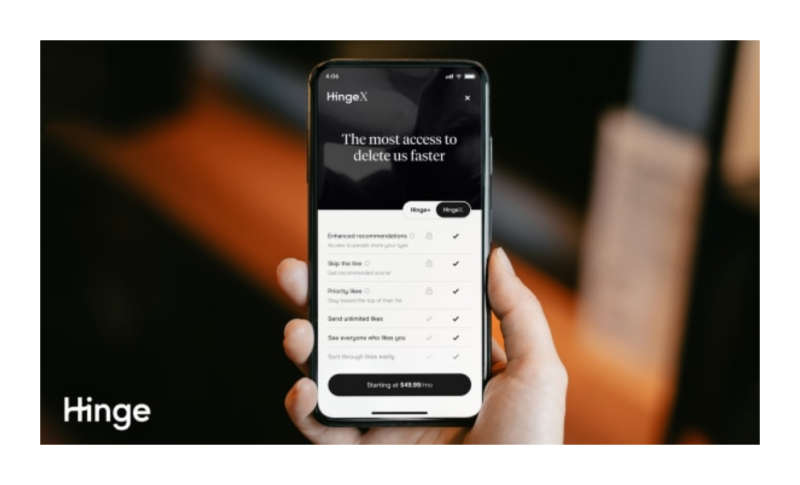
Match which will roll out a superpremium tier on Tinder in the fall. "If you actually take a small fraction of our payers at higher price points, you actually get a number that's in the tens of millions of dollars on an annual basis," CEO Bernard Kim said.
Bumble CEO Whitney Wolfe Herd sees premium services delivering new opportunities. "We see that there's a lot of runway to expand there."
Even if uptake is slow, there is precedent behind the move to raise prices. Mark Brooks, CEO of Courtland Brooks, which helps online dating companies grow, said that other brands, such as eHarmony and Tawkify, have for years priced their premium services above what Tinder, Hinge and Bumble charged. The stakes are high in showing users that paying is worth it, Brooks said. Otherwise, they could defect to competing platforms. "They've got to actually really deliver on it, because they'll get crucified if they don't," said Brooks.
Match Hopes to Re-Spark Tinder With a New CMO
MeetUp: an Alternative to Dating Apps?
 AARP – Ed Baig is the former tech editor at USA Today and is now at AARP. He asked me for a non-conventional 'social' alternative to dating apps for seniors, and I suggested Meetup. Here's the excerpt from a list of 50 recommended apps.
Meetup lets you mingle with people who share your interests and can match you with 300k groups and 100k weekly events. You can find a nearby book club, hiking group or someone you want to spend more time with. "This is a great place to meet like minds outside the explicit context of dating," says CEO Mark Brooks of Courtland Brooks, who consults with dating services. "Then count on serendipity and put some effort into meeting new friends through the friends you just met by inviting them out to your own group events."
by Edward C. Baig
See full article at AARP
This post also appears on Very Social Network
How COVID-19 Transformed Match Group’s Online Dating Empire
 TEXAS MONTHLY – July 27 – Match Group adapted well to the pandemic. The company garnered $2.39B in 2020, up 17% YOY. It reintroduced video dates, and 40% of Tinder users plan to continue using video dates even after the pandemic eventually ends. That expectation led Match to purchase Hyperconnect, a South Korean social-media company, for $1.73B. Hyperconnect's technology, which is expected to be incorporated into all Match apps, can translate text and voice messages across 20 languages, and its live-streaming app, Hakuna, allows users to create their own video streams. It's similar to Plenty of Fish Live! which allows users to create their own communities around themselves and whatever they choose to broadcast. "Match has just won every battle, and the war….. They are the behemoth of the industry, and they've had a very good acquisition strategy," says industry analyst and former Plenty of Fish advisor Mark Brooks. Some of Match's success, Brooks says, can be attributed to the consistency of its leadership. Thombre has been at Match Group for over a decade, and Sharmistha Dubey, who was named its CEO last year, joined the company in 2006. "They come from a supply-chain background, both of them, and they're the two leaders," Brooks said. "Shar is very pragmatic . . . a smart operator." Mark Brooks says that the future for Match Group lies in expanding its reach to other countries, and not getting usurped by aggressive newer players like Bumble. "Match will only be unseated in the next major media shift, which is augmented reality," Brooks says, adding that it will be "exceedingly creepy and hugely challenging from a legal perspective, but absolutely transformational." Brooks suggests that there's also room in the industry for more of a human touch in dating, such as personalized matchmaking as a premium service. "At some stage, certain people will pay more to have help and feedback and a bit of sugarcoating on that feedback from people who know how to communicate," he says.
Japanese Dating App, Pairs, Gives Women Control and Makes Men Pay
 WALL STREET JOURNAL – Apr 25 – Match Group says Japan is its second-biggest market after the U.S., thanks to the popularity of its Pairs app. The company says its revenue in the country is seven times what it was five years ago. Pairs is Japan's top-ranked dating app, with 3.1M downloads in 2020, according to App Annie. It is aimed at singles serious about matrimony and tries to make women comfortable about signing up. Men have to pay and show their full real names if they want to start chatting. Women get in free and can use initials (46% of Pairs users are women). "Internet dating in Japan wasn't just stigmatized – it was beyond a stigma. It was viewed as dirty," said Mark Brooks, a consultant who advises internet dating businesses. "Japan has always been enticing to internet dating companies, but they knew they had a job to do to clean up the reputation of the industry overall." About half of Match Group's $2.4B in revenue last year came from outside the U.S. Match Group's success in Japan started with an acquisition of Eureka, the developer Pairs, in 2015.
by Suryatapa Bhattacharya
See full article at Wall Street Journal
Interview With Mark Brooks
DEAL ARCHITECT – Apr 8 – Burning Platform: Digital Nomads. Fascinating session with @markcbrooks. He defines work from anywhere. He has worked from Shanghai, Bali, Malta, now Dubai. Lots of takeaways for employers and politicians #futureofwork.
In this video, hear about…
- The crosswalk test
- My alternative schooling concept
- The need for a fallback position
Billionaire Ruben Vardanyan Invests in AI-Based Dating Service iris Dating
 FORBES – Feb 24 – Vardanyan became a shareholder in iris Dating (NYC) which is powered by AI. "I understand that if by 2030 45% of Europeans are single, and if we see that people live another 30-40 years longer and at the same time many of them do not have a second half, then loneliness becomes one of the most important elements of the future world," Ruben reasoned.
iris Dating uses AI to understand the visual preferences of each user. AI determines what is interesting to a particular person and finds the photo which the user will like. On dating apps women like 3-5% of male profiles. On iris, girls like 30%. The service has selfie verification, and a reliability rating. Growth Director Daniel Mori is on the team and was VP Marketing at Zoosk for 5 years.
Mark Brooks (of Courtland Brooks) says "AI is most useful when we can see if people are successful in relationships. But this is difficult to do because users remove dating apps when they decide to end their online dating, which usually means they are happy or unhappy. Typically, we don't know the exact cause, and the AI isn't getting the most optimal information." He estimates that it will cost $400,000 to develop a scalable, world-class dating application.
The Complete Guide to the Online Dating Industry
 QUARTZ – Feb 14 – Dating online has revolutionized how we fall in love. The industry has 270m monthly users globally and grew by 13% in 2020, but online dating (swiping) has become exhausting. Experts say the apps that define the next era of online dating will offer more fun, safety, and community.
Amarnath Thombre, head of Match North America said Match's strategy is to "have each app run its own experiment," and, as the experiments play out, the company can use the successful features in its other properties. Match is also expanding into Asia with the lucrative Pairs in Japan, and Hawaya a Muslim-focused service.
Bumble had 42m MAU in Q3 2020. Facebook Dating seems to have fizzled, although some industry experts say it still has big potential [(Mark Brooks)]
"Pretty much everything that we charge for on Hinge, we couldn't really give away for free because then it wouldn't work anymore," said Hinge's CEO/founder Justin McLeod. "Think about Roses, for example. Roses are really, really special. If we gave everyone unlimited Roses, then it would completely defeat the purpose of Roses." Hinge downloads grew 63% globally between 2019 and 2020.
Mark Brooks, a leading industry consultant, says that for dating apps to be able to keep monetizing, moving into a more community-oriented gear is the way to go. "We want people to stick around, have fun. Yes, hook up, meet up, and maybe stick around even beyond that point," he said. "I think we'll see a general shift away from dating into more community-esque apps."
Since the beginning of the pandemic, The Meet Group saw livestreamed minutes increase by 40%. The Meet Group provides livestreaming for Match Group's Plenty of Fish, and the feature is proving to be popular. In Feb Match acquired Hyperconnect, a Korean "social discovery" company that owns a livestreaming app, and a video and audio chatting app that translates conversations in real time, for $1.7B.
Cook points out that the growth of the dating industry has generally been slowing. "And so what do dating companies do when you're saturating the market? …they find other ways to engage the user. …they can provide some entertainment value."
Every female dater interviewed for this article mentioned how they often feel unsafe on the apps, or how they are put off by unwanted sexual attention. In 2019, Bumble launched a feature that detects and blurs inappropriate photos. Tinder directs users who report violations to support organizations. Content moderation is slowly getting better.
Dating could jump to new media. For a true dating revolution to happen, the industry needs another media shift, like the one from desktop to mobile, said Brooks. He predicts that the jump will be to Augmented Reality, and that through wearable technology like AR lenses, people will get more "intel-on-the-go" about potential matches. "When passing by someone who has double matched, or is viable and an exceptional date candidate, they will be indicated to them." (Hakuna Live, one of the apps Match acquired in its Hyperconnect deal, features augmented reality avatars).
What's more, Brooks thinks we need more "coaxing along" when we're dating. AR, as well as "informed, tailored advice" from the dating service will deliver helpful nudges in real time, such as: "it's been 20 days since your last date night, might be time for a date at ,'" he said. "I think the benefits of timely advice will outweigh the creepiness of having a computer act as an informed advisor."
by Hanna Kozlowska
See full article at Quartz
Mark Brooks: Please see Courtland Brooks for more information on our niche agency/consultancy. We help Internet dating and online social communities to grow, and get their strategy, business development and marketing (more) right. 😉
See the top news on Match Group See the top news on Facebook Dating
See the top news on Bumble See the top news on Hinge
See the top news on The Meet Group See the top news on POF
The Rise of Borderless Dating
 QUARTZ – Feb 16 – In the early days of the pandemic, Tinder users started teleporting themselves into other countries. The feature, normally available with Tinder's paid subscriptions, was so popular that the company made it free for everyone for a month. Bumble followed suit, giving users the option to set their location filters "nationwide". Location has started mattering less. Nicole Parlapiano, VP of marketing for North America at Tinder, also says that Gen Z has a more relaxed, open approach to dating. "I think the world's getting smaller. What matters is good interaction, good conversation. And you can jump on a plane, you can get in a car," said Geoff Cook, CEO of The Meet Group, which owns streaming app MeetMe. OkCupid said in a blog post that since the start of the pandemic "connections and conversations across borders are up 50%, and people are setting their location preferences to 'anywhere' more than ever before.” ~1.5M users say they are open to a long-distance relationship. Dating coach and industry consultant Steve Dean said his clients have been more willing to widen their geographical perimeter during the pandemic. Eric Resnick, longtime online dating coach and industry consultant, is skeptical. "He wonders, how do you navigate a new online relationship? Are you exclusive, or do you also date locally?" "There's potential for it, but I think it's inherently risky," he said. "Nothing's real until you're in the same room at the same time as someone."
by Hanna Kozlowska
See full article at Quartz
See the top news on Tinder See the top news on The Meet Group
See the top news on Bumble See the top news on OkCupid