

Category: eHarmony
Reasons Why L.A. Is The Perfect Market For Dating App Launches

British Singles Trapped In Casual Dating Cycles, eHarmony Finds
 PR NEWSWIRE – June 3 – New eHarmony research reveals that 15% of the newly-single population take just a week to get back into 'the dating game' and many Britons believe that quantity is the key to love – with over a third (39%) thinking the more dates they go on, the more chance they have of finding the one.
Can Match Fend Off Facebook And Bumble?
by Leigh Gallagher
The full article was originally published at Fortune Magazine, but is no longer available.
See all posts on Match Group See all posts on eHarmony
See all posts on Badoo See all posts on Spark Networks
See all posts on Bumble See all posts on Meetic
See all posts on Facebook Dating See all posts on Tinder
Millennial Couples Don’t Rush Wedding
 NEW YORK TIMES – May 29 – Young adults not only marry and have children later than previous generations, they take more time to get to know each other before tying the knot. Helen Fisher, an anthropologist who studies romance and a consultant to the dating site Match.com, has come up with the phrase "fast sex, slow love" to describe the juxtaposition of casual sexual liaisons and long-simmering committed relationships. The eHarmony report on relationships found that American couples aged 25 to 34 knew each other for an average of six and a half years before marrying, compared with an average of five years for all other age groups. Both men and women now tend to want to advance their careers before settling down.
by Roni Caryn Rabin
See full article at New York Times
Facebook: “eHarmony’s Chief Scientist Doesn’t Work On Our Dating Product”
 TECH CRUNCH – May 4 – Dr Steve Carter, a data scientist who helped design and build the psychometric and relationship models that became the basis of eHarmony is working at Facebook. But Facebook has confirmed to us that Carter is not working on the new dating service, and the company declined to say what he is doing. He joined Facebook in Aug '17. Carter's profile on LinkedIn describes him as a data science manager, "helping Facebook get even better at making meaningful and beneficial connections between people and communities."
by Ingrid Lunden
See full article at Tech Crunch
A Contradiction In Contexts :: Why Dating Is Deadly For Facebook
OPW – May 2 – Yesterday I sent out a request to IDEA members to comment about the news that Facebook is getting into Internet dating. Before I go through the responses and permanently bias my opinion, I thought I'd reflect on some key points first.
Facebook has captured the market for social networking. They just own it at this stage. But dating is different. Here's why. **Context matters**
CONTEXT MATTERS – Recently I studied under Professor Paul Dolan at London School of Economics for their MSc Behavioral Science. The one thing we heard from Paul over and over again, to the point that it became amusing, was that 'context matters.' Meaning, the way behavior works is extremely context sensitive. The rules may apply in one context, but than a perfectly good experiment and observation may fail in another context.
Facebook = place to stay in touch with friends = non-private
Dating App = place to meet new love interests = private
When people go on a social network they are there to communicate with people they already know. The dating context is the antithesis. When people go to their favorite dating app, they're seeking a private place to find someone new to meet. These contexts are at odds with each other. I don't see how Facebook will be able to overcome this in the minds of users.
I had a stint at Friendster in 2003, which was a precursor to Facebook (see thumbnail). The CEO Jonathan Abrams thought dating was cheesy. After his girlfriend dumped him, he decided to create a service that would do a better job than dating sites, and presumably, not be cheesy. He wanted to link people up online, but his model and site floundered in the end, and MySpace and then Facebook took market dominating positions. Key to them taking their dominant positions was that their context was more clear (and their sites actually worked). MySpace ended up losing to Facebook because their context was less clear, and people were allowed to create fakester accounts and link with non-friends on Myspace. It was the wild west, and a popularity contest. Facebook came in and encouraged people to think about who they were linking with. Consequently, the network was built on real friendships, and the context was and is beautifully clear.
Social networking was born with dating in mind. But noone's ever successfully pulled the trigger to really combine dating and social networking, because they are two entirely separate use-cases and contexts. I got recruited into FriendFinder in 2003 when the CEO insisted on turning half of FriendFinder into a social network. It didn't work. Social networking was deadly to dating.
Now, it seems, Facebook is going to experiment with dating, and I think this is dangerous for maintaining their clear social networking context. Dating is deadly to social networking.
MEETUP SINGLES EVENTS VOID – Where Facebook definitely wins out, is events. There's a significant void in the market for dating events since Meetup banned singles events and groups in 2016. That will certainly help them win favor and attention from singles. But to what ends? They will just erode their social networking context.
MATCH WINS, SO FAR – Match Group is the clear winner in the Internet dating game, at this stage. They've routed the industry with the combined force of Tinder, POF and Match. Match Group have the most to lose with the introduction of free dating on Facebook. But, I think the real losers will be all the small startups that will have an even harder time raising money and getting to critical mass. eHarmony, meanwhile, should be just fine.
EHARMONY IS LESS HARMED – Steve Carter was at eHarmony from its beginning, from 1999-2017. He was their Chief Scientist, the man behind their algorithm, basically. But he left eHarmony in July 2017 to join Facebook. For the last 10 months he's been at Facebook to help them "get even better at making meaningful and beneficial connections between people." See https://www.linkedin.com/in/docscarter/.
This is probably fine by eHarmony. They have a distinct offering in the dating market. It's the service that requires more of their users, and in theory, delivers more. eHarmony is positioned as a matchmaker, in a sea of dating apps. They're more thoughtful, take a bit more time, and take a bit more money from users who are more committed. I think Facebook dating directly competes with Match Group offerings, but eHarmony has a more resilient brand against Facebook's lite dating app. Perhaps its time for Match Group to take another look at eHarmony. After all, it's ok to look. (hint: before Facebook does!)
PERFECT MODEL, PROBABLY NOT REALIZABLE FOR FACEBOOK – I think the perfect theoretical model for the perfect Internet dating service is, one app with all the singles on the planet on it, with really great introductions algorithms, based on observed behavior. People often lie about what they want, and who they are, but by observing behavior, and preferences in-the-moment they can form a more accurate picture of true character. Having a window into user behavior is key for dating. Facebook has this window, but can't use it. It would be just too creepy for a lot of people. Facebook is just not the company that would be trusted to do this. Facebook might well do an end-run around Tinder, but I don't think they'll be able to deliver on the perfect theoretical Internet dating model because they will not be trusted to get enough access to observable behavior. (2nd hint: but eHarmony might!)
So in short, I don't think Facebook can deliver on dating, and by entwining the dating context into their social networking context, they risk confusing and alienating users. Tinder will suffer, and eHarmony won't. We'll all need to innovate faster and be more creative about marketing. Humdrum just won't work any more.
Feel free to blast any of these ideas with your constructive feedback. 🙂 What's your thoughts?
See all posts on Facebook Dating
Post by Mark Brooks, CEO IDEA
eHarmony To Host A Dating Masterclass

eHarmony Is Investing In Machine Learning To Make Smarter Matches
 WHICH-50 – Apr 9 – eHarmony is using machine learning and data science to figure out its users' preferences to make more successful matches. eHarmony uses two techniques to match singles. The initial match is based on compatibility. This measure is determined by the extensive questionnaire. eHarmony then uses machine learning, which it calls affinity matching, to learn about behaviour on the site as an indicator of what users like. The site currently runs 20 different affinity models.
Internet Dating Analysis: Who’s Growing And Who’s Firing
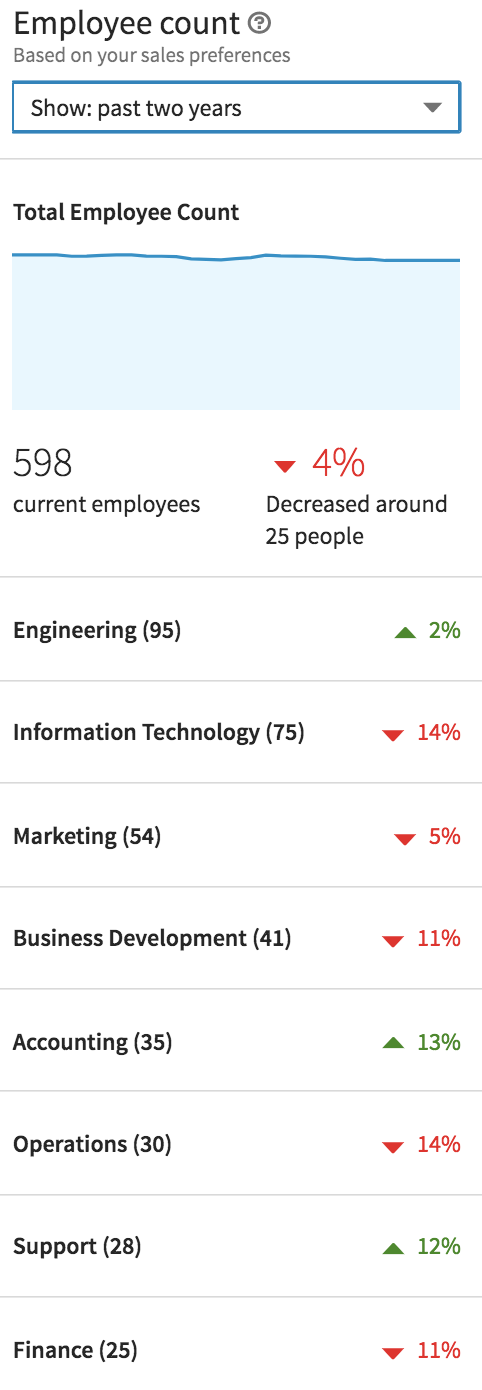
OPW – Apr 5 – According to Linkedin Match.com is showing no growth over the last two years, with 598 employees. Tinder is the big growth story with 320 employees and 116% growth over the last 2 years. PlentyofFish is also broken out from Match, and is up 15% over the last 2 years with 94 employees. Meanwhile, OKCupid are have been quite stable at 64 employees.
Zoosk is stable at 170 employees. They dipped to 158 employees but actually show 1% employee growth over the past 2 years.
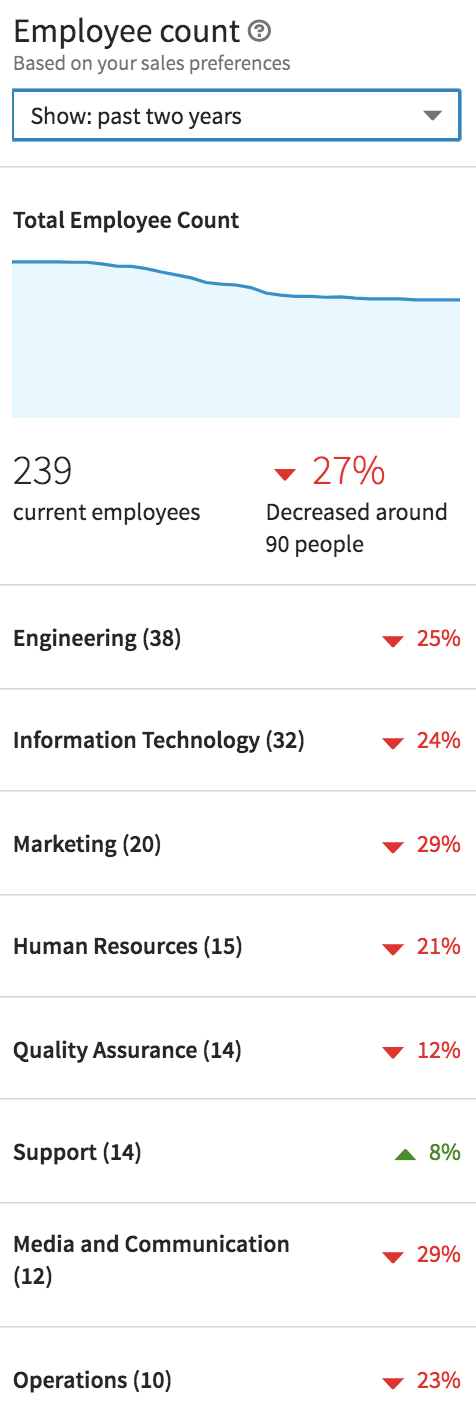
eHarmony has leveled off to 239 employees in the last 6 months but is down 27% over the last 2 years.
See full article at Courtland Brooks blog.
Post by Mark Brooks, CEO IDEA