
 NEW YORK TIMES – Match Group and Bumble have seen a significant drop in market value since 2021, losing ~$40B. To address this, both companies have brought in new leaders aiming to innovate and attract more paying users. However, a key challenge remains: convincing young users to pay for dating app subscriptions. Bumble's CEO, Lidiane Jones, plans to revamp the app to appeal to younger users with more personalization and flexibility. Meanwhile, Match Group's CEO, Bernard Kim, is focusing on rapid experimentation and marketing to increase paying users. Match Group has also expanded its offerings with services like Archer for L.G.B.T.Q. dating and Chispa for Latinos, although revenue from these products was down in 2023.
Category: Outlets – New York Times
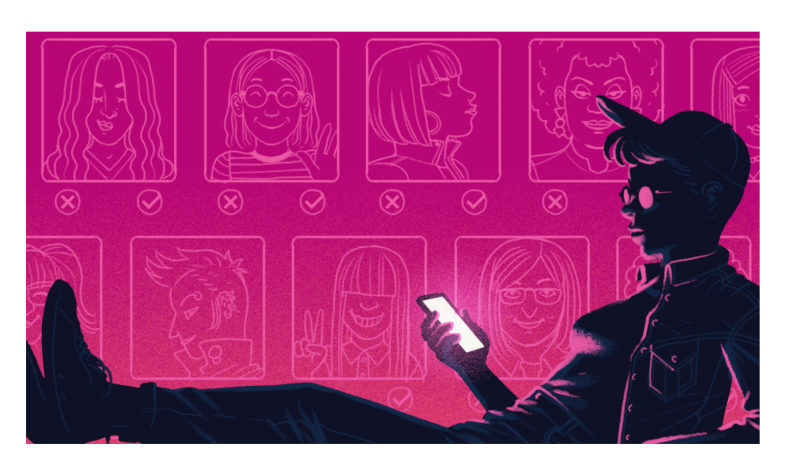
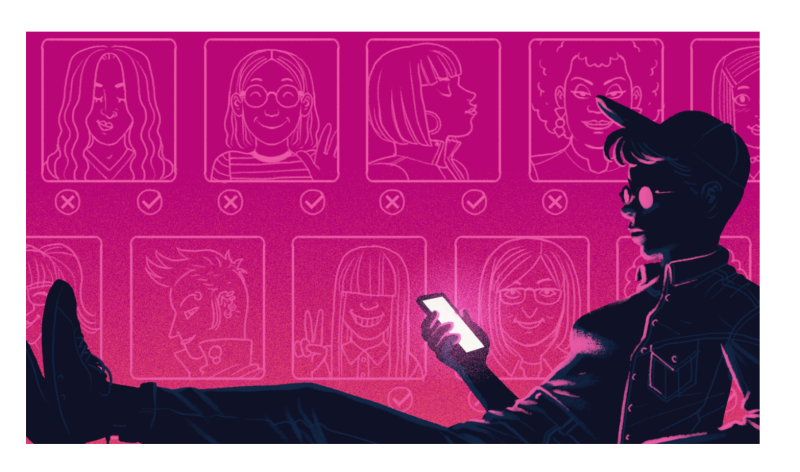
The Quest to Outsmart Dating App Algorithms
Feeld: the Dating App for Inclusivity and Honesty
 NEW YORK TIMES – Feeld, which started as a dating app for couples and singles called 3nder in 2014, has, under Ana Kirova's leadership, positioned itself as a go-to for nonmonogamous, sex-positive and kinky people of all sexual orientations. It's also acquired a reputation as a space that fosters directness. Half of Feeld's users in the United States identify as something other than heterosexual, according to the company. Today, the company, which had about a dozen or fewer employees for many years, has ~100, with about one-third of those hired this year. Since receiving half a million dollars from an angel investor in 2016, Feeld says that it has remained profitable without any additional external support. Since 2015, it has offered subscription memberships. Recently, Feeld has also made the leap to IRL, hosting 31 in-person socials worldwide this year, with 200 attendees at each.

Tired of Dating Apps, Some Turn to Google Docs

by Jenny Gross & Livia Albeck-Ripka
See full article at New York Times
Muzz Takes Its Matchmaking on the Road
 NEW YORK TIMES – ~250 Muslims have gathered at a halal Italian restaurant in Brooklyn for a singles dating event hosted by Muzz, a London-based Muslim dating app with 8M users worldwide. The event provided an environment for young Muslims to meet potential partners while respecting their faith, culture, traditions, and family values. Attendees received color-coded stickers to facilitate introductions, with the ultimate goal of helping them "meet the one." Muzz, founded in 2011, claims to have facilitated marriages for 400K couples. The company has hosted similar events in other North American cities, including Toronto, Jersey City, New York, and Baltimore, as well as in London and Dubai.
Love You on Tinder. On Hinge, Not So Much.
 NEW YORK TIMES – With many dating apps available to suit virtually any preference, each with its own unofficial norms and expectations, it's no surprise that users modulate their personalities from one dating app to the next. Whereas an app like Hinge incentivizes leading with details that suggest users are serious about finding a relationship, an app like Feeld welcomes those who put their kinkiest foot forward. Users adjust accordingly. David Coursi, a 29-year-old copy editor at an advertising agency, said that he almost had a missed connection with one woman he first matched with on Tinder – until she found him to be more appealing on Hinge.
by Gina Cherelus
See full article at New York Times
See the top news on Tinder
See the top news on Hinge
See the top news on Feeld
Dating Is Broken. Going Retro Could Fix It.
 NEW YORK TIMES – A slew of matchmaking companies and articles declare matchmaking is hot again. Netflix shows: "Indian Matchmaking," "Married at First Sight," "Bridgerton." In today's online world, burnout, opacity and callousness define dating. Options, filters and low barriers to engagement often don't translate to high-quality interactions.
[with matchmaking] a mediated match connects people who are looking for the same kind of relationship education, religion, values and may ease the difficulties of approach. Matchmakers add accountability.
Intermediation is best combined with another hallmark of traditional courtship: early, transparent communication about values and long-term goals. In practice [online dating filters] aren't used well. It's not uncommon to date for years without broaching the big questions about marriage and children. Sex tends to be embraced more quickly. A 2010 study (APA Journal of Family Psych) found that couples who waited until marriage to have sex reported less consideration of divorce and higher relationship satisfaction
Meeting someone through a 3rd party like a friend, parent or matchmaker, creates accountability that discourages bad behavior. They are mentors who can look at the matchmaking process "from an objective place". Many of us go on dates seeking the spark of chemistry and tumble into bed, or relationships, often without ever determining whether our prospective partners pass the most basic of compatibility tests.
by Michal Leibowitz
See full article at New York Times
Mark Brooks: The online personals industry needs to be more personal. Computers aren't quite enough for many people, who will pay for human guidance and encouragement. The critical services are pre and post-date feedback and careful, customized guidance and encouragement. I am backing matchmaker.com (in development) to help the dating industry connect with the matchmaking industry en masse.
Dating Apps Thrive in China
 NEW YORK TIMES – China has cracked down on many tech companies, but has allowed dating apps that provide social connections to flourish. The number of dating apps in China with over 1K downloads soared to 275 this year from 81 in 2017, according to data.ai. Downloads of the apps have increased, as have in-app purchases. Investors have also poured ~$5.3B into dating and social networking companies in the country last year, up from $300M in 2019, according to PitchBook. Zhang Lu, the founder of Soul, a dating app backed by Tencent, has said that "loneliness is the core problem we want to solve." In July, Soul filed for an IPO in Hong Kong after tripling its monthly active users to 31M between 2019 and 2021.
by Chang Che and Zixu Wang
See full article at New York Times
The Toll of Dating App Burnout

by Catherine Pearson
See full article at New York Times
See the top news on Tinder
See the top news on Bumble
See the top news on Match.com
Looking for Love in the Metaverse
 NEW YORK TIMES – Nevermet is one of a growing number of virtual reality (VR) dating services that allow users to match with other VR enthusiasts and then arrange a meetup somewhere in the metaverse. There's also Flirtual or Second Life’s Lonely Hearts Dating Agency. Nevermet launched on Valentine's Day of this year, and its goal was to completely reconfigure human nature. "We intend to change the dating market, where physical attraction will become one of several factors rather than the primary way people connect," said Cam Mullen, Nevermet's CEO. Nevermet's interface is similar to those of other dating apps like Tinder or Bumble, only instead of photos, users' profiles show their metaverse avatars. Some suggest VR is a way for people to bury their heads in the sand instead of engaging with the often uncomfortable work of being a human who's looking for love in the world. But for a lot of VR users, having access to a flourishing dating life online isn't a way to avoid the wider world; it's a way to access it. VR can also be a space for users to safely experiment with their sexual identity and/or gender expression.