
 MASHABLE – Bumble, along with UN Women UK, TV personality Amy Hart, and the magazine Grazia, are calling for a change in the UK's proposed Online Safety Bill (OSB). The current legislation concerning cyber flashing, or sending unsolicited nude images without consent, is based on whether the sender had harmful intent. This is difficult to validate and prove, Bumble and supporters say, and would give room for those who cyber flash to claim it was a "joke." Instead, Bumble's campaigning for the cyber flashing portion of OSB to be consent-based. Almost half (48%) of UK adults aged 18-24 have received a sexual photo they didn't ask for, according to a 2021 survey of 1,800 respondents in England and Wales.
Category: Reporters – Anna Iovine
Why Age-verification Bills Won’t Work
 MASHABLE – Recently, age-verification bills for porn sites have been making headlines, but experts argue that they won't work and may even harm online privacy and free speech. Instead, they suggest better ways to protect children online. Age-verification bills, such as Louisiana's Act 440 and Utah's SB 287, require visitors to sites with a significant portion of adult content to prove their age using a commercial age-verification system (AVS). Utah has also passed two other bills, SB 152 and HB 311, which require age verification for all users on social media sites; parental permission to access social media for those under 18; and social media curfews for under-18s. These are supposed to go into effect in March 2024, but social media platforms are expected to challenge these laws beforehand. Despite good intentions, these bills have numerous issues:
- Difficult to enforce: Websites based in other countries may not comply, and users can easily bypass restrictions with VPNs.
- Privacy risks: Intrusive and ineffective AVSs may expose people's private information and browsing habits.
- Domino effect: If multiple states adopt different verification methods, it could lead to a complex and restrictive system affecting everyone online.
These bills could also negatively impact adult content creators, who already face censorship and loss of income due to similar legislation like FOSTA-SESTA. Instead of relying on age-verification bills, experts recommend parents take a more proactive approach to protect children from adult content.
Tinder Backs UK Government Campaign to Fight Loneliness
Tinder Users Are Using ChatGPT to Message Matches
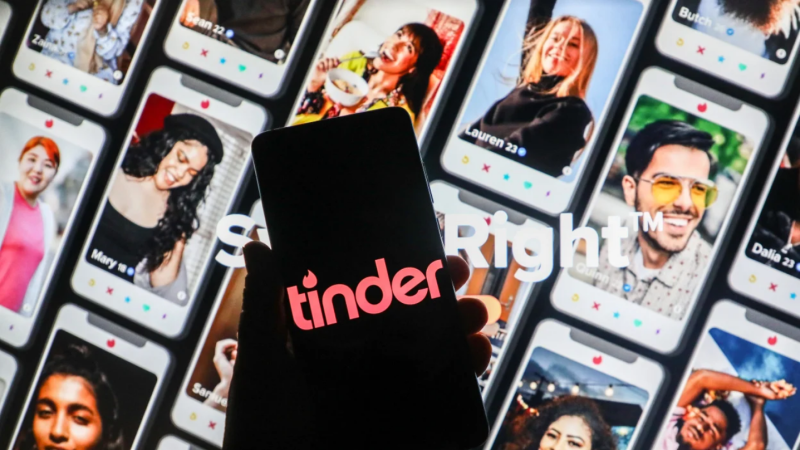
 MASHABLE – Once they match with someone, Tinder users ask ChatGPT for an opening message based on their interests. Then they copy and paste the output and send it to their match. One "Tinder veteran" used ChatGPT to generate a poem for his match. She loved it, saying a guy hadn't written a poem for her before. With using an AI bot on Tinder, there are potential ethical concerns at play here; the dominant from these examples is disclosure. How would a match feel if they knew the messages were AI-generated?
Tinder Users Say ‘Situationship’ Is a Valid Relationship Status
 MASHABLE - In an in-app survey among Tinder users aged 18-24 in the UK, U.S., and Australia last month, 1 in 10 respondents said they prefer situationships as "a way to develop a relationship with less pressure." The app saw a 49% jump in members adding "situationship" to their profiles from January to October this year.
Bumble Is Bringing ‘Ted Lasso’ Dating App Bantr to Life

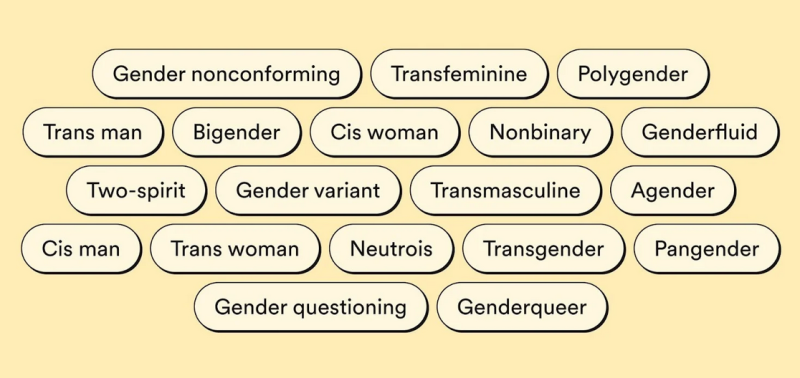
Bumble to Let Nonbinary Users Message Anyone First
9 Dating Apps and Sites That Died
 MASHABLE – Here are nine dating sites and apps that died. RIP.
- Sparked
Facebook Dating launched in 2019, five years after founder Mark Zuckerberg claimed that Facebook was a better dating site than Tinder. Facebook Dating has thousands of active users, while Tinder has millions. Facebook tried again with Sparked, a video speed dating app that launched last year. Sparked shut down less than a year after its inception. - Chappy
UK reality star Ollie Locke launched gay dating app Chappy in 2018 with help from Bumble founder Whitney Wolfe Herd. Chappy shut down and folded into Bumble just two years later. - Hater
Hater made waves back in 2017. This app's niche was connecting people through things they despise. App founder Brandon Alper pitched Hater on Shark Tank in 2017 and received $200K from billionaire Mark Cuban, but the following year Hater wasn't making money. - HowAboutWe
HowAboutWe was an innovative dating app in that singles snagged dates by suggesting activities with each other. HowAboutWe's demise was due to a buyout. Match acquired HowAboutWe in 2014, and the site is no more. - Spoonr
First called Cuddlr, the app launched in 2014 to help people find platonic cuddle buddies. Cuddlr shut down in 2015 and rebranded as Spoonr months later. Spoonr closed in 2017 with a tweet: "It was fun while it lasted! SPOONR is now closed! Hugs." - Siren
Siren launched in 2015 by two women of color to "fight the swipe" of dating apps created by men. Instead of swiping, Siren posed daily questions for users to answer and seek potential matches based on whose responses they liked. Siren shuttered in 2017 with a blog post. Co-founders Susie Lee and Katrina Hess claimed that investors didn't complete their payments, and the app ran out of money. - Missed Connections
Oh, Craigslist Missed Connections. Gone too soon. - Yahoo! Personals
A site with the same fate as Craigslists' personals, Yahoo! Personals shuttered in 2010 when it merged with Match. - GreatBoyfriends.com and GreatGirlfriends.com
A two-for-one, GreatBoyfriends and GreatGirlfriends launched in 2002 by then-Elle Magazine columnist E. Jean Carroll. GreatBoyfriends and Girlfriends died after wedding site The Knot acquired them in 2005.
How Do the Best Dating Algorithms Work?
 MASHABLE – Tinder: The Tinder algorithm used to be based on the Elo rating system, which was originally designed to rank chess players. The "Elo score" gauges how other profiles interacted with yours. It logged your swipes. Elo is no longer used. Now, the most important thing a user can do is…use the app. The more data Tinder has on you, the more Tinder knows your preferences and the algorithm is based on how your profile is Liked or Noped.
Hinge: The dating app "designed to be deleted" doesn't have swiping. Hinge uses the Gale-Shapley algorithm. This Nobel-prize winning algorithm was created to find optimal pairs in "trades" that money can't buy – like organ donations. Say there are 10 women and 10 men. How do they get paired up? Well, tell one group (either the men or women) to pick their first choice, and if they get rejected they move on to their second choice. Continue until none of the people left want to get matched anymore. Tell the app when you've met a match in person and Hinge understands who you're interested in.
OkCupid: OkCupid has 4k questions. There's 60 sexual orientation and gender options. OkCupid calculates a match percentage. If another user has similar search preferences and responses to questions as you, and is looking for the same things relationship-wise, you'll have a high match percentage.
Bumble: Bumble is similar to Tinder in that it uses a swipe model. Bumble declined to comment about its search algorithm.
Grindr: Grindr only uses algorithms for security purposes, like detecting spam accounts. There's no recommendation algorithm to speak of on Grindr today.
by Anna Iovine
See full article at Mashable
Mark Brooks: Frankly, I'm surprised at the lack of substance here. Our job is to bring clarity to a complex problem. Who to date? Who to marry? Who to raise a family with? (…and perhaps guide people further on how not to screw it up). This is not an unsolvable problem, but it is highly nuanced. Culture, religion, values, and lifestyle preferences compound the problem. Also, what people say they want and what they are willing to accept can be quite different. i.e. stated preferences vs revealed preferences. Observing people's behaviors and getting feedback after each date is key. Also, we really need to know when we have been successful. When we have clear visibility on this, at scale, then AI becomes useful for helping us solve for long-term compatibility.
See the top news on Tinder See the top news on OkCupid
See the top news on Bumble See the top news on Grindr
See the top news on Hinge
Tinder to Make ID Verification Available Worldwide
 MASHABLE – Aug 16 – The feature – which will allow users to verify their identity by uploading a photo of documentation – will be voluntary except when mandated by law. A case of the latter is Japan, where verification of being 18+ is required to be on Tinder; this is done with a form of ID like a license or passport. Tinder's ID verification rolled out there in 2019. Now, Tinder will begin testing out the feature in other major markets. The app's Head of Trust & Safety Product, Rory Kozoll, said the company will do a test-and-learn approach to the rollout, as ID verification is complex and nuanced.
by Anna Iovine
See full article at Mashable
Mark Brooks: Fantastic news. Verifying users is core to what all (real) dating apps should be doing. Our users should have fewer surprises and more great first dates if the dating industry is to really achieve its potential. Next week I'm rolling out an analysis of service providers that help dating companies verify and authenticate and do background checks. Email mark@courtlandbrooks.com if you'd like to see an early copy.