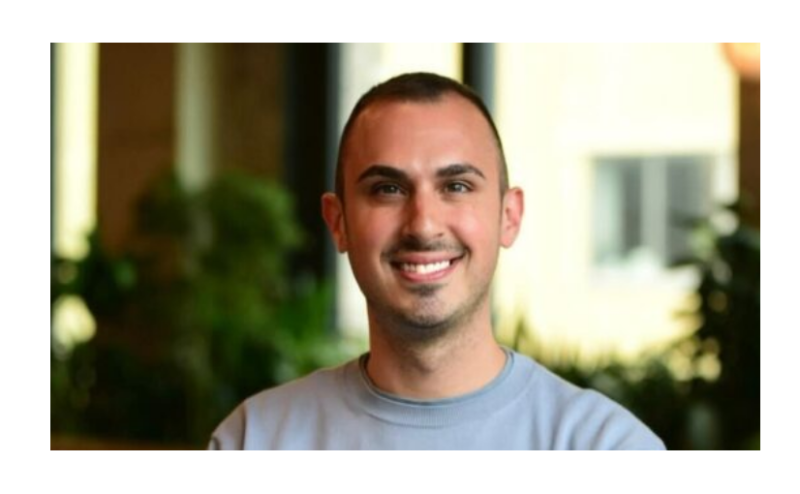
MARKETING HAPPY HOUR – Michael shares a peek into his background in brand and communications. He explains how OkCupid and Archer are attracting younger Millennial and Gen Z daters by staying timely and relevant in a crowded market. Michael gives us a glimpse at some of the fun campaigns he's been a part of at Match Group. He also shares a few tips from an article he wrote for PR Week: 5 strategy essentials to keep in mind during your brand's first 100 days, including the advice to meet your consumer where they are.
Category: OkCupid
OkCupid Celebrates Two Decades of Connections
OKCUPID BLOG – OkCupid celebrates its 20th anniversary, highlighting key trends shaping the future of dating and relationships.
Key trends include:
- Inde-Dating: A majority of Gen Z and Millennial daters value independence.
- Poli-Dating: Political discussions are increasingly important.
- Tralationships: Younger generations prioritize honesty, transparency, and authenticity in relationships.
- Dateheists: The importance of shared religion is declining among singles
- VideoDating: Video chatting before meeting in person is becoming a preferred step for daters
Michael Kaye: AI, Storytelling, and Global Brand Challenges at OkCupid
RAGAN – Michael Kaye, the director of brand marketing and communications at ARCHER and OkCupid, has been honored as one of Ragan's 2023 Game Changers. He successfully expanded OkCupid's brand globally and managed communications across diverse markets. Kaye emphasizes the importance of understanding artificial intelligence and analyzing data for storytelling. He also highlights the need for understanding intersectionality due to the diversity of Gen Z. Despite appearing confident in public speaking roles, Kaye admits to dealing with social anxiety. He recalls a memorable experience when OkCupid's initiative was mentioned in a White House press briefing related to COVID-19 vaccination.
by Isis Simpson-Mersha
See full article at Ragan
LGBTQ+ Online Dating: a Historical Overview
THE BAY AREA REPORTER – In 1993, Andy Cramer, the CEO of Caregiving Network, founded Gay.Net, one of the earliest platforms for gay men, especially during the HIV/AIDS crisis. This bulletin board system (BBS) later merged with Gay.com, reaching 4M users by 1999. Back in 1987, Jean Marie Diaz in the U.S. established Sappho, a hub for lesbian email lists. Amy Goodloe further expanded the online lesbian community with lesbian.org in the mid-1990s. In 1999, Gary Frisch and Henry Badenhorst introduced Gaydar, offering chat rooms for queer men. OkCupid launched in 2004 and, while not exclusively LGBTQ+, became popular within the queer community. By 2021, it had broadened its gender and sexual orientation identifiers to 60, collaborating with organizations like the Human Rights Campaign and GLAAD. Joel Simkhai launched Grindr in 2009, the first geolocation dating app specifically for gay men, later expanding its offerings and user base. After leaving Grindr, Simkhai founded Motto, a dating app that aimed to counter "toxicity and discrimination" in some queer dating platforms. In 2015, Robyn Exton established HER, originally known as Dattch, as a platform for the "FLINTA (female, lesbian, intersex, trans, and agender) community," focusing on both dating and community aspects. Tser stands as a dating app for the transgender community, presenting itself as both a dating platform and social community for trans individuals and allies.
AI’s Growing Role in Online Dating
INTELLIGENCER – Online dating fatigue is pushing platforms like Match Group, which operates Tinder and OkCupid, to integrate AI for a better user experience. Match Group aims to use AI for photo selection and matchmaking insights. However, AI tools like ChatGPT are already used by some users to enhance their profiles. As AI becomes more prevalent, concerns about authenticity and an optimization "arms race" arise. The future of AI-driven dating remains to be seen.
Match to Post Q2 Earnings: What’s in Store?
YAHOO FINANCE – Match reports on Aug 1 and expects Q2 revenues of $805-$815 million. Zacks Consensus Estimate is $814m, indicating 2.4% growth year over year. Match Q2 performance is likely to have benefited from continued momentum at Tinder and solid performance of Hinge, Pairs and OkCupid.
- In the first quarter, the number of total payers increased 10% to 16.4 million from the prior-year quarter. Match Group is persistently investing for the improvement of machine learning tools that can efficiently and proactively identify, prevent and eliminate spam.
- The launch of Archer should boost users.
- In Q1, Match Group introduced a new feature called 72 hours which promotes more meaningful connections with a time-sensitive experience.
- The acquisitions video tech company, Hyperconnect and non-dating app Ablo might aid international revenue. Hyperconnect continues to build momentum.
- Hinge rolled out features which address questions around sexuality and features answers from leading LGBTQIA+ voices. This is likely to have attracted subscribers.
See full article at Yahoo Finance
Mark Brooks: I wonder how Match Groups' experiments with high-end value points, i.e. $500 a month, will play out? That move will certainly inspire and impact the industry. I believe we are leaving money (value) on the table. People want more. We need to find new ways to give it to them.
Online Dating Stocks: Wall Street Bullish Despite Slump
BUSINESS INSIDER – Wall Street analysts predict a resurgence in online dating apps despite their poor stock performance since 2021. Match Group and Bumble have seen a significant decline in their stock value (Match Group has shed 75% of its value since hitting a record share price of $169.53, Bumble has tumbled 77% from its IPO of $75.46), but analysts remain optimistic due to strong growth prospects and the sustained popularity of online dating. Bank of America analyst Nat Schindler cited that these stocks are undervalued relative to their cash flow and foresees significant potential for growth. He also believes that online dating, being a primary means for new couples to meet, won't face a recession even if the economy does, as it meets a basic human need for connection. Sam Yagan, the co-founder of OkCupid and former CEO of Match, said that the years following the 2008 recession were actually OkCupid's best years. However, investors remain cautious, particularly due to concerns about the broader economic climate and the impact of the Federal Reserve raising interest rates. Meanwhile, dating apps are making strategic changes, such as short-term subscriptions and brand revamps, to attract users and prepare for economic challenges. Analysts suggest that investors are taking a "wait and see" approach.
by Jennifer Sor
See full article at Business Insider
See the top news on Bumble
See the top news on Match Group
See the top news on OkCupid
Match’s FTC Investigation Over OkCupid Photo Sharing for Facial Recognition Tech Continues
COURTHOUSE NEWS – A federal court in Washington denied Match Group's request to seal the case brought against it by the FTC regarding its deal to provide OkCupid's images to a start-up developing facial recognition technology. The New York Times published an article in July 2019 about the use of images of people's faces to build facial recognition technology, citing Clarifai's access to OkCupid's photos as an example. This prompted the FTC to initiate a non-public investigation into whether Match engaged in unfair competition by sharing consumer information, including photos, of OkCupid users.
Why Are Most Dating Apps So Similar to Each Other?
MAKE USE OF – Dating apps often seem similar due to several factors. Firstly, many mainstream apps like Tinder, Match, OKCupid, and Hinge are owned by the Match Group, which dictates the overall approach and design of these platforms. Secondly, the freemium model, where basic services are free but premium features are locked behind a paywall, is common across the industry, leading to similar user experiences. Mobile optimization for smaller screens and a need for a mass appeal also contribute to a uniform design language. Additionally, many users are on multiple platforms, which might make the experience feel repetitive. Lastly, the lack of a foolproof algorithm for successful matching and the apps' desire to keep users engaged leads to the use of similar gamified elements across platforms. Despite these similarities, subtle differences might make one app more suited to a user than others.
OkCupid Debuts ChatGPT-Generated Matching Questions
MASHABLE – The AI chatbot ChatGPT has had a chokehold on the internet since it debuted in Dec. 2022. Almost immediately, dating app users started using the service to write messages to matches. OkCupid has started experimenting with asking users matching questions generated by ChatGPT. The app's global head of communications Michael Kaye asked ChatGPT what questions to ask on a dating app and what questions to ask when dating, and here's what the chatbot replied:
- Are you more of an introvert or extrovert?
- Are you a morning or night person?
- What's your favorite way to spend a weekend?
- What do you value most in a partner?
- How do you know when to take a relationship to the next level?
- How do you balance your own needs with the needs of your partner in a relationship?
The questions have been answered more than 125,000 times and counting, and Gen Z is surely leading the charge. 31% of Gen Z daters on OkCupid don't think that using AI to create a profile or message others on dating apps is a violation of trust.