
Category: All Internet Dating Statistics
5 Mobile App Predictions for 2024 by Data.ai
 DATA.AI – Data.ai's 2024 Mobile App Predictions report highlights significant trends for the upcoming year in the mobile app industry. Key predictions include:
- Generative AI will play a major role, with a 40% increase in downloads of AI-functional apps.
- Microblogging apps, particularly Twitter, are expected to see a decline in daily active users.
- TikTok is projected to become the highest-grossing app ever, surpassing $14.6B in App Store spend. Tinder will be #4 with ~$10B in App Store spend.
- Consumer spend in mobile gaming is forecasted to rebound to $111.4B. Social media apps will focus on direct consumer revenue through in-app purchases, challenging traditional ad-based monetization models. The report emphasizes the growing importance of AI in mobile apps and the shifting landscape of social media and gaming consumer spending.
Study: Gen Z Is Comfortable With Multiple Sex Partners
 FOX NEWS – A study reported by Fox News Digital reveals that 57% of Gen Z, those aged 18-29, are open to non-monogamous relationships. This finding comes from a survey by Ashley Madison, where 40% of its new members in 2022 were from this age group. The survey highlights a trend towards greater acceptance of non-traditional relationships among younger people. Additionally, despite their comfort with non-monogamy, Gen Z members tend to keep their relationships and sexual life private, particularly on social media.
H4M Matchmaking Survey – AI, LGBTQ and Online Dating
 PR NEWSWIRE – H4M Matchmaking's survey shows 44% of LGBTQ+ singles are concerned with AI in dating, with 45% having been deceived by AI or chatbots. Additionally, 58% find it harder to make genuine connections online, and 57% feel online dating has become more stressful. Despite 75% not using AI in dating apps, there's an openness to AI if it could lead to real-life dates, with 49% willing to try it. However, 45% have experienced deception, like catfishing, on dating apps, underscoring the need for safer online dating environments.
Survey: ‘Ghosting’ Impacts 84% of Dating and 50% of Friendships
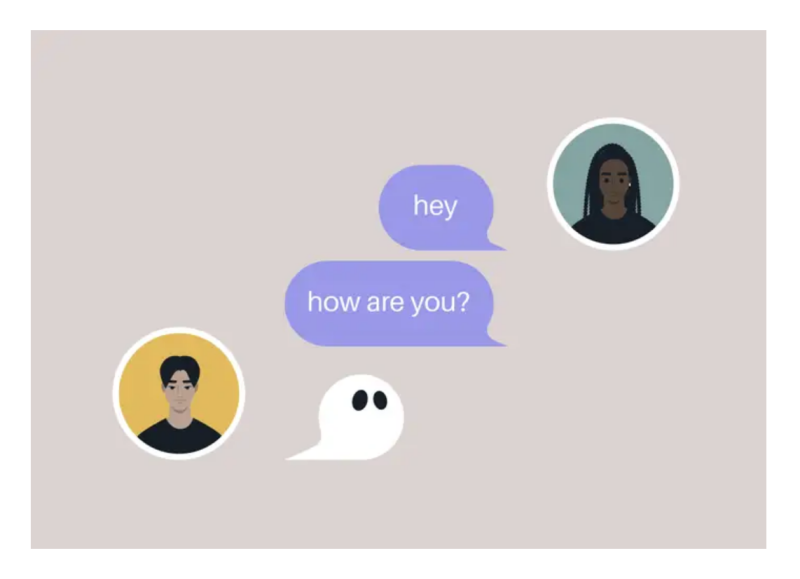
 IOL – A study by the Thriving Center of Psychology found that 'ghosting' is prevalent, with 84% of Gen Z and millennials experiencing it in dating, and 50% in friendships. Women are more likely to ghost than men, often to avoid confrontation or due to lost interest. The emotional fallout from being ghosted includes confusion and hurt, leading some to reciprocate the behavior as a defense mechanism. Despite negative feelings, many see ghosting as an acceptable response in certain situations. This trend is also evident in professional contexts, with individuals ghosting employers or workplaces. The study involved 1014 young adults.
Unpacking the Online Dating Effect
 PSYCHOLOGY TODAY – In a new study in the journal Computers in Human Behavior, researchers compared the marriages of 923 people who met their spouse either online or offline. The study showed that people who meet their spouse offline are more satisfied. Online daters also report less stable and satisfying marriages in what the researchers term the online dating effect. Even though online daters reported different outcomes than offline daters, their relationships were still of high quality, on average.
Top Reasons Gen Z And Millennials Ghost, According to Survey
 MEN'S JOURNAL – ~84% of Gen Zers and Millennials have experienced ghosting, according to a survey by the Thriving Center of Psychology. The primary reasons people ghost are a lack of interest in continuing the relationship (64%), wanting to avoid confrontation (56%), feeling stressed or overwhelmed (44%), and a lack of connection (41%). Some also ghost due to being offended (39%) or mental health struggles (29%). Most respondents linked ghosting with online dating, and feelings post-ghosting vary from relief to guilt and regret.
92% of American Adults Prefer to Date People Who’ve Been to Therapy
 CNBC – A survey by dating app Pure found that 92% of American adults favor dating individuals who've undergone therapy. 70% are open to discussing mental health early in relationships, and half appreciate therapy being mentioned on a first date. Psychotherapist Esther Perel sees pros and cons to this new reality. In a June interview with Vanity Fair, she explained how the shift to more transparency about emotional health and the benefits of counseling have created a space where more people can develop greater self-awareness and prioritize self-reflection. At the same time, some people might hide behind "therapy speak" or use it to push others away, she added.
Festival Romance: Bumble’s Insight Into India’s Dating Trends and Preferences
 HINDUSTAN TIMES – Bumble's study reveals that 63% of Indians are interested in festival dating. During India's festive season, 36% prefer celebrating with friends, and 27% with their partners. 18% are open to finding a festive date when away from home. For couples, 48% enjoy festive shopping together, and 42% attend festive parties as a duo. However, 30% feel self-conscious about being single during festivals. Another 32% feel pressured to find a date, with Millennials feeling this more than GenZers. Tips for festival dating include normalizing feelings, prioritizing self-love, and enjoying the experience without undue pressure. The survey was conducted among 2,003 adults in India.
Half of Gen-Z Have Been Catfished: Should Dating Apps Have Mandatory Verifications?
 YAHOO LIFE – Dating apps are under scrutiny as calls for mandatory profile verification grow louder. This demand comes in response to concerns about issues like catfishing and sextortion that can negatively impact user experience and the reputation of dating platforms. According to studies by The Cyber Helpline, 49% of Gen Z have been victims of sextortion catfishing crimes, with 90% having to make changes to their everyday life because of this, and 74% feeling it has impacted their physical safety. Mandatory profile verification can enhance user trust and reduce the risk of users encountering misleading or fake profiles.